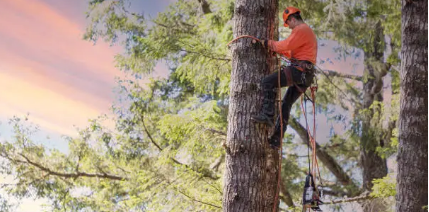
Understanding the core skills and tools required is essential not only for safety but also for maintaining tree health and environmental balance across properties in Adelaide Hills. The work of a tree arborist Adelaide Hills professional is significantly more complex than basic tree trimming or landscaping. In regions like the Adelaide Hills, where steep gradients, native eucalyptus species, unpredictable wind exposure, and bushfire-prone conditions are common, arborists must combine technical expertise with highly specialised equipment.
This article breaks down the critical competencies and equipment every arborist should master when working in such demanding terrain.
1. Core Technical Skills Every Arborist Must Develop
A professional tree arborist Adelaide Hills specialist must first possess a strong foundation in arboricultural science and field application. These skills determine how safely and effectively they can assess and manage trees in varied conditions.
Tree Biology and Health Assessment
Arborists must understand how trees respond to pruning, stress, pests, and disease. In the Adelaide Hills, where native species like stringybark and gum trees dominate, recognising early signs of decay or structural weakness is crucial.
Risk Assessment and Hazard Identification
Given the region’s sloping properties and storm exposure, arborists must evaluate risks such as limb failure, root instability, and proximity to structures or power lines. A strong risk assessment skill set prevents accidents and property damage.
Precision Pruning Techniques
Correct pruning techniques, such as crown thinning, reduction, and deadwood removal, help maintain tree structure without compromising health. Improper cuts can lead to long-term decay or instability.
2. Essential Physical and Climbing Skills
Working as a tree arborist Adelaide Hills requires more than ground-level knowledge. Much of the job involves working at height in unpredictable environments.
Rope Access and Climbing Proficiency
Arborists must be skilled in single- and double-rope climbing systems. These techniques allow safe navigation through large trees in confined or sloped properties.
Balance and Spatial Awareness
Working in eucalyptus canopies demands exceptional balance, coordination, and awareness of shifting weight loads as branches are cut or repositioned.
Chainsaw Handling at Height
Operating chainsaws while suspended requires advanced training. Arborists must maintain control while managing recoil, vibration, and limited movement space.
3. Core Tools Used by Professional Arborists
A qualified tree arborist Adelaide Hills relies on a combination of cutting-edge equipment and traditional tools. Each item serves a specific function in ensuring efficiency and safety.
Climbing Gear
This includes harnesses, carabiners, ropes, ascenders, and friction devices. All gear must meet strict safety standards and be regularly inspected for wear.
Chainsaws and Pole Saws
Lightweight top-handled chainsaws are essential for aerial work, while pole saws allow pruning from the ground in tighter areas.
Rigging Equipment
Pulleys, lowering devices, slings, and ropes are used to safely control the descent of heavy branches, particularly important in residential areas of Adelaide Hills.
Personal Protective Equipment (PPE)
Helmets with face shields, cut-resistant clothing, gloves, and steel-toe boots are mandatory to minimise injury risk.
4. Advanced Diagnostic and Planning Tools
Modern arboriculture increasingly depends on technology. A skilled tree arborist Adelaide Hills uses diagnostic tools to make informed decisions before any cutting begins.
Resistograph and Tree Decay Detection Tools
These devices measure internal wood resistance, helping identify hidden decay not visible externally.
Aerial Inspection Drones
Drones allow arborists to inspect tall or inaccessible canopies, reducing the need for risky climbs during preliminary assessments.
Digital Mapping and Tree Inventory Software
These tools help manage large properties by mapping tree locations, health status, and maintenance schedules.
5. Environmental Awareness and Regional Knowledge
Working in the Adelaide Hills requires a strong understanding of local ecological and environmental conditions.
Bushfire Risk Management
Arborists must identify high-risk vegetation and recommend pruning or removal strategies that reduce fire hazards during dry seasons.
Native Species Management
Understanding local species behaviour is vital. For example, many eucalyptus trees have brittle limbs that can drop unexpectedly even in calm weather.
Soil and Terrain Adaptation
Steep slopes and varying soil types affect root stability. Arborists must adapt their techniques based on ground conditions to avoid destabilising trees or causing erosion.
6. Communication and Client Management Skills
A successful tree arborist Adelaide Hills professional must also communicate clearly with property owners, councils, and contractors.
Explaining Risk and Recommendations
Clients often need guidance on why certain trees require pruning or removal. Clear explanations help ensure informed decision-making.
Regulatory Compliance Knowledge
Local council regulations may restrict tree removal or pruning. Arborists must understand the permitting requirements in Adelaide Hills to ensure compliance.
Project Planning and Coordination
Large-scale tree work often requires coordination with other trades, especially in construction or land development projects.
7. Safety Systems and Continuous Training
The arboriculture industry evolves continuously, and so must the skills of a tree arborist Adelaide Hills practitioner.
Regular Equipment Inspection
All climbing and cutting equipment must be checked before and after use to ensure structural integrity.
Ongoing Certification and Training
Arborists should maintain current certifications in climbing, chainsaw operation, and first aid.
Emergency Response Preparedness
Given the inherent risks, arborists must be trained in rescue techniques and emergency procedures, especially when working at height.
Conclusion
Becoming a proficient tree arborist Adelaide Hills professional requires far more than basic gardening knowledge. It demands a blend of scientific understanding, advanced technical skills, physical capability, and specialised equipment. In a region like Adelaide Hills, where environmental conditions can shift rapidly and tree species present unique structural challenges, mastery of both tools and techniques is essential for safe and effective tree management.
For arborists working in this field, continuous learning and investment in high-quality equipment are not optional—they are the foundation of safe, sustainable, and professional tree care.